You can trek in Nepal in every month of the year. The country rises from about 60 m on the southern plains to 8,849 m on Everest, and the Himalaya divide it into a wet south side and a dry rain shadow to the north. So the best time to trek in Nepal depends on where you walk. When cloud covers one region, another is often clear.
The short answer, by type of trek:
● High treks on the south side of the Himalaya (Annapurna Base Camp, Everest, Langtang, Manaslu, Kanchenjunga): October and November, then March to May.
● Low and middle treks near Pokhara (Poon Hill, Sikles, Australian Camp): October to April, including winter.
● The rain shadow (Upper Mustang, Lower Dolpo): spring and autumn, and also June to September, when the rest of the country is wet.
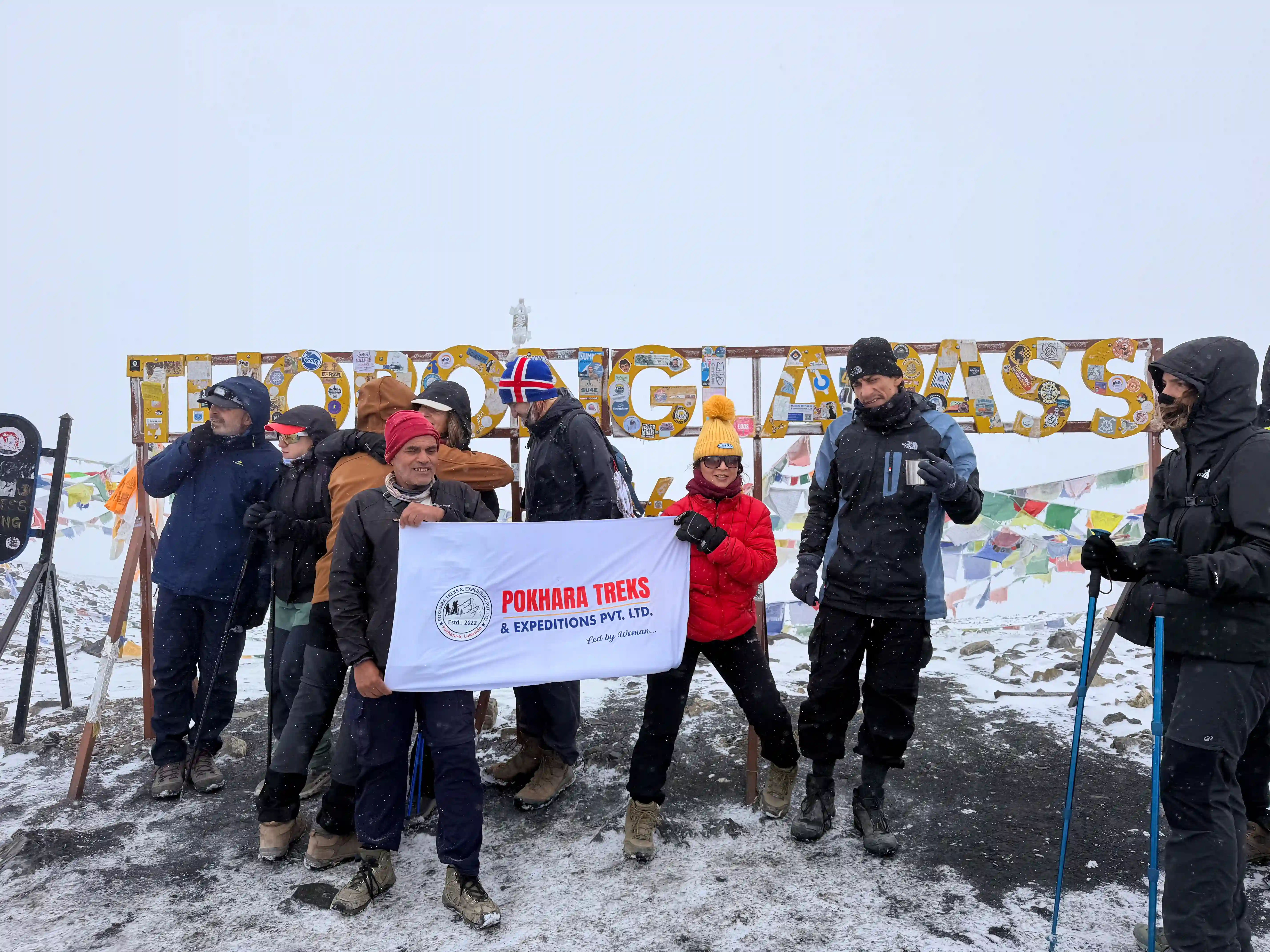
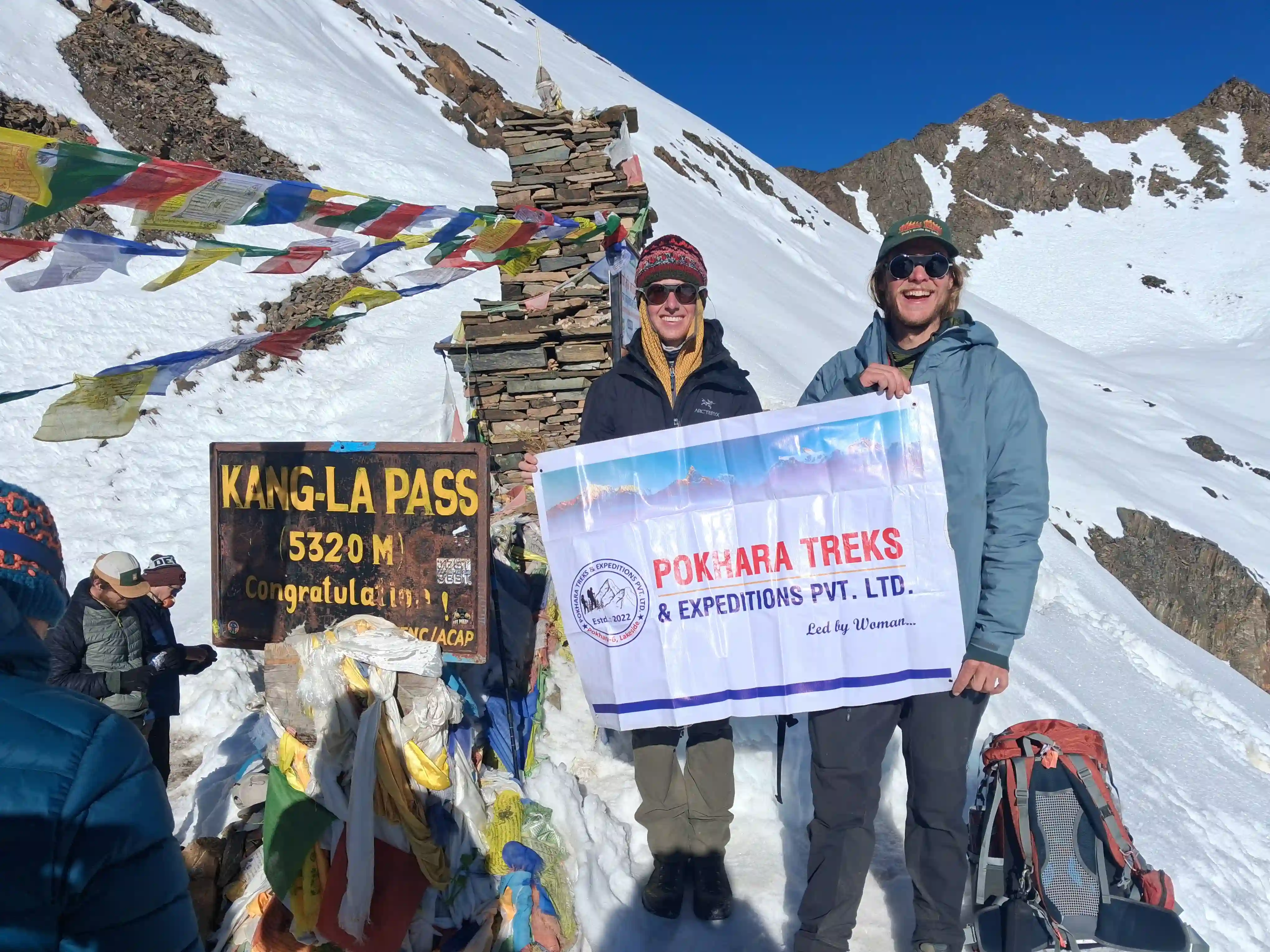
● High passes (Thorong La, Larkya La, Cho La): October and November, then April and May.
October and November are the busiest months because almost every region is good at the same time. They are not the only good months. This guide goes through the trekking year region by region, matches Nepal's seasons to school and public holidays in the US, UK and Germany, and uses official weather station records, visitor numbers and what we see from our office in Pokhara.
By Pokhara Treks and Expeditions, Pokhara
Why the best month changes from place to place
Three things decide the season on any trek: height, the rain shadow and how far east the trek is. These are the 1991 to 2020 averages from Nepal's Department of Hydrology and Meteorology (DHM), the official climate normals, for three places on our routes:
● Pokhara (827 m), on the wet south side, where most of our treks begin.
● Jomsom (2,741 m), behind the Annapurnas on the way to Mustang.
● Lukla (2,786 m), the start of the Everest trek.
|
Month |
Pokhara day / night |
Pokhara rain |
Jomsom day / night |
Jomsom rain |
Lukla day / night |
Lukla rain |
|
January |
20 / 7 °C |
22 mm |
10 / −2 °C |
14 mm |
8 / −3 °C |
15 mm |
|
February |
23 / 10 °C |
35 mm |
12 / −1 °C |
21 mm |
9 / −2 °C |
17 mm |
|
March |
27 / 13 °C |
64 mm |
15 / 2 °C |
30 mm |
13 / 3 °C |
45 mm |
|
April |
30 / 16 °C |
142 mm |
19 / 4 °C |
21 mm |
17 / 6 °C |
59 mm |
|
May |
30 / 19 °C |
355 mm |
21 / 8 °C |
19 mm |
17 / 8 °C |
128 mm |
|
June |
31 / 21 °C |
648 mm |
23 / 12 °C |
32 mm |
18 / 12 °C |
325 mm |
|
July |
30 / 22 °C |
941 mm |
23 / 14 °C |
47 mm |
18 / 13 °C |
530 mm |
|
August |
31 / 22 °C |
839 mm |
23 / 14 °C |
44 mm |
19 / 13 °C |
642 mm |
|
September |
30 / 21 °C |
635 mm |
21 / 12 °C |
36 mm |
19 / 12 °C |
419 mm |
|
October |
28 / 17 °C |
159 mm |
18 / 6 °C |
18 mm |
17 / 7 °C |
103 mm |
|
November |
24 / 12 °C |
17 mm |
15 / 2 °C |
5 mm |
14 / 2 °C |
6 mm |
|
December |
21 / 8 °C |
12 mm |
12 / −1 °C |
5 mm |
11 / −1 °C |
under 1 mm |
1. The rain shadow splits the country in two. Pokhara gets about 3,870 mm of rain a year and Jomsom about 290 mm, although the two towns are less than 80 km apart. Lumle, on the road towards the Ghorepani trailhead, gets about 5,490 mm, which makes it one of the wettest places in Nepal. The Annapurna and Dhaulagiri ranges catch the monsoon before it reaches the valleys behind them. That is why Mustang and Dolpo can be trekked in July while the south side is under cloud.
2. Height decides the cold, and so the winter. Temperatures fall by roughly 6 °C for every 1,000 m you climb. A pleasant 24 °C November afternoon in Pokhara means frost at night at 3,000 m and −10 °C or colder at 5,000 m. Treks that stay below about 3,500 m stay open through the winter. Treks that cross passes above 5,000 m close for weeks at a time when the snow comes.
3. The east gets the monsoon first and hardest. DHM gives 13 June as the normal arrival of the monsoon in eastern Nepal, and it reaches the west a few days later. So the dry windows are shorter around Kanchenjunga than in central Nepal. In the south-side valleys the monsoon brings most of the year's rain: in Pokhara, June to September brings 79% of it, with about 26 rainy days in July and only one or two in November and December.
Where to trek, month by month
Every month has at least one region in good condition. The weather column describes the main trekking hills between about 1,000 m and 4,000 m on the south side.
|
Month |
What the weather does |
Mountain views |
Trails |
Where to trek this month |
|
January |
Dry, cold, short days |
Very good on clear mornings |
Very quiet. Snow above about 3,000 m |
Poon Hill, Sikles, Australian Camp, Helambu |
|
February |
Dry and cold, slowly warming |
Very good |
Quiet. Snow and ice up high |
Poon Hill, Myagdi ridges, Mardi Himal for hardy walkers |
|
March |
Warming, the odd shower |
Good, haze starts late in the month |
Busy again from mid-month |
Annapurna Base Camp, Everest Base Camp, Annapurna Circuit from mid-month |
|
April |
Warm, afternoon cloud |
Good mornings, hazy afternoons |
Busy. Rhododendrons in flower |
Poon Hill, Mardi Himal, Langtang, Kanchenjunga, Rara |
|
May |
Hot low down, storms building |
Hazier, cloud by midday |
Busy early, quieter late |
Upper Mustang, Everest, Manaslu, West Nepal |
|
June |
Monsoon arrives |
Rare |
Quiet, wet, leeches |
Upper Mustang |
|
July |
Wettest month |
Very rare |
Empty, landslides on roads |
Upper Mustang, Lower Dolpo with spare days |
|
August |
Very wet |
Very rare |
Empty, landslides on roads |
Upper Mustang |
|
September |
Rain easing, but not over |
Clear spells late in the month |
Getting busier |
Upper Mustang, Lower Dolpo |
|
October |
Clear and settled after the rains |
The best of the year |
The busiest month |
Every region, high passes included |
|
November |
Dry, colder nights |
Excellent |
Busy early, quieter late |
Every region. High passes in the east and west before mid-month |
|
December |
Dry, cold |
Very good |
Quiet |
Poon Hill, Everest Panorama, Sikles, Myagdi ridges, Tsum Valley early in the month |
The best time in each region
Each region has its own window. The table is the summary. Below it we explain why each region behaves as it does, and give the best months for the treks we run there.
|
Region |
Best months |
Second choice |
Hard or closed |
|
Low hills around Pokhara |
October, November |
December to April |
June to September, wet but walkable |
|
Annapurna, south side (ABC, Mardi, Khopra) |
October, November |
March, April |
June to August |
|
Annapurna, north side (Circuit, Tilicho, Nar Phu) |
October, November |
Mid-March to early May |
January and early February for the pass |
|
Mustang (Upper and Lower) |
October, early November |
April to September |
December to February |
|
October, November |
March to May |
June to September |
|
|
October, November |
Late March to May |
June to September |
|
|
October to mid-November |
Late March to May |
December to February, June to September |
|
|
Mid-October to late November |
Late April, May |
December to March, June to September |
|
|
October to mid-November |
April to early May |
December to March, June to September |
|
|
West Nepal (Dolpo, Rara, Dhorpatan) |
Late September to early November |
April to early June |
High passes closed from about late November to April |
The low hills around Pokhara: a trek in every month
These treks top out at about 3,200 m or lower, so winter brings cold mornings but rarely closes the trail. This is why Pokhara works as a base all year. In the monsoon the trails stay open, but they are wet, leeches are common in the forest, and the mountains are mostly hidden.
● Ghorepani Poon Hill: best in October and November. Late March to April is rhododendron season around Ghorepani, and December to February is cold and clear. The stone stairs can be icy on winter mornings.
● Sikles village: best in October and November, good in March and April, and it runs all year.
● Australian Camp day hike: a one-day walk from Pokhara that works in any dry spell, and gives clear Annapurna views on winter mornings.
Annapurna, south side: Annapurna Base Camp and Mardi Himal
These treks climb into the snow line on the wet side of the range. Autumn and spring are the reliable seasons, and our Annapurna region trekking guide compares the south side, the north side and Mustang month by month. Winter is possible with the right gear, and the monsoon hides the views they are walked for.
● Annapurna Base Camp: best in October and November, then March and April. In winter snow can close the trail above Deurali for a day or two.
● Mardi Himal: best in October and November, then March and April. In winter it is beautiful with microspikes, but snow and ice above High Camp can stop the walk to the viewpoint.
Annapurna, north side: the Circuit, Tilicho and Nar Phu
Thorong La, at 5,416 m, decides the season here. It is usually crossable from mid-March to May and from October to November. Between December and February it can be blocked by snow for days at a time. In the monsoon, the valley above Manang is much drier than the south side, but late floods can cut the Marsyangdi road below it.
● Annapurna Circuit: best in October and November, then mid-March to early May. December and late February are possible with spare days and a guide who knows the pass. Avoid January and early February.
Mustang: the rain shadow
Mustang lies behind the Annapurna and Dhaulagiri ranges, so it gets very little monsoon rain. That makes it the one region we recommend from June to September. Winter is the hard season here, very cold and windy.
● Upper Mustang: best in October and early November, also good from April to September. In summer the barley fields around Lo Manthang are green. The risk in the monsoon is on the road from Pokhara, not on the trail.
● Upper Mustang Tiji Festival Tour: timed for Tiji, the masked dance festival in Lo Manthang, in May or early June, just before the monsoon.
Everest
The Khumbu lies on the south side of the range, so the monsoon reaches it in full: Lukla records 642 mm of rain in August. Night temperatures at Base Camp, from the weather station on the Khumbu Glacier, are in our Everest trekking guide. Autumn and spring are the two seasons. Spring has a second draw here: in April and May, the climbing expeditions fill Base Camp with tents.
● Everest Base Camp: best in October and November, with late November quieter than October. March to May is warmer, with flowering forests below Namche. December to February is clear but very cold, with nights around −12 °C near Base Camp in January.
● Everest Panorama: best in October and November, also good from March to May. It stays below 4,000 m, so December is cold, clear and a good choice.
Getting there in the busy seasons. Many flights to Lukla now leave from Manthali airport in Ramechhap, not Kathmandu, so you first travel there by road from Kathmandu. In autumn 2025 airlines planned 50 to 65 Manthali–Lukla flights a day in good weather. Allow for the drive and for weather delays when you plan your dates.
Langtang
Langtang is the closest trekking region to Kathmandu, and its seasons follow central Nepal: autumn first, spring second. In winter the high valley around Kyanjin Gompa is very cold, but Helambu, lower down, is the best choice in January. In August, pilgrims walk to Gosaikunda for Janai Purnima in the rain. The Langtang trek guide has modelled temperatures for Kyanjin Gompa, month by month.
● Langtang Valley: best in October and November, then late March to May, when the rhododendrons flower. June to September is not recommended.
Manaslu
Larkya La is the deciding factor on the Manaslu Circuit. It is usually clear of deep snow from October to mid-November and from late March to May, when the gorge lower down is also dry enough to walk safely. Spring has one advantage here: the rivers in the gorge are at their lowest before the monsoon, which matters in years when floods have damaged the trail. Tsum Valley, partly in a rain shadow, stays pleasant into early December. Month-by-month conditions at Samagaun are in our Manaslu trek guide.
● Manaslu Circuit: best from October to mid-November, then late March to May. In winter snow usually blocks the pass and many high lodges close. In the monsoon, landslides hit the road and the gorge.
Dhaulagiri
The Dhaulagiri Circuit crosses two high passes on remote glacier ground, so it has one of the shortest windows in Nepal. The ridge treks of Myagdi, such as Khopra, Mulde and Mohare, are lower and stay open from October to April. Bay of Bengal storms can bring heavy snow to the passes as late as the end of October: in October 2025 one trapped a trekking group in Hidden Valley for several days. Our Dhaulagiri trekking guide sets the circuit and the Myagdi ridges side by side, month by month.
Kanchenjunga
Kanchenjunga is in the far east, where the monsoon comes first and hardest, so its windows are shorter than in central Nepal. Autumn gives the clearest air. In spring the forests between Taplejung and Ghunsa flower, but snow can stay on Sele La and Nango La into April. From December to February the high trails are not trekked. The modelled weather for Ghunsa is in our Kanchenjunga trek guide.
West Nepal: Dolpo, Rara and Dhorpatan
West Nepal has two climates. Dolpo and Humla lie in the rain shadow and stay walkable later into the monsoon, while Rara, Dhorpatan and the Far West get heavy rain in July and August. The high passes of Dolpo and Humla are closed by snow from about late November to April. In April the forests around Rara are in flower. Our West Nepal trekking guide compares Dolpo, Rara, Dhorpatan and the Far West month by month.
● Lower Dolpo: best from mid-September to early November, then late April to early June. It is walkable in the monsoon, but flights to and from Juphal are often cancelled, so it needs several spare days.
4. Your holidays and Nepal's seasons: US, UK and Germany
Nepal is in the northern hemisphere, like the US, the UK and Germany, so its winter falls in your winter and its spring in your spring. The big difference is summer. Your summer holidays fall in Nepal's monsoon, when most of the country is wet. Here is what Nepal is like in each of your seasons, and where to trek then.
|
When it is this at home |
What Nepal is like |
Where to trek |
|
Winter, December to February |
Dry, cold and clear. Snow on the high passes |
The hills around Pokhara, Everest Panorama, Helambu |
|
Early spring, March and early April |
Warming, rhododendrons starting to flower, busy again from mid-March |
Poon Hill, Annapurna Base Camp, Everest Base Camp, Langtang |
|
Late spring, late April and May |
Warm and hazier, with afternoon cloud. Climbing expeditions at Everest Base Camp |
Upper Mustang, Everest, Manaslu, West Nepal |
|
Summer, June to August |
The monsoon. Rain on most days on the south side |
Upper Mustang and Lower Dolpo, in the rain shadow |
|
Early autumn, September |
The end of the monsoon. Green hills, wet days |
Upper Mustang, or wait for October |
|
Autumn, October and November |
The main season. Clear and settled |
Every region |
Trekking in Nepal from the United States
● Spring break, usually in March, set by your school district. Late March brings the first rhododendrons and clear mornings. Annapurna Base Camp fits a week's break from Pokhara. Everest Base Camp needs about two weeks.
● Memorial Day weekend, 31 May 2027. The end of the spring season. Upper Mustang is dry and green, and Tiji in Lo Manthang falls in May or early June.
● Summer vacation, June to August. Choose the rain shadow: Upper Mustang is our first choice, with spare days for the road from Pokhara.
● Labor Day, 6 September 2027. Still the monsoon on the south side. Upper Mustang, or move your trip to October.
● Thanksgiving, 25 November 2027. The best US holiday for trekking. Late November is clear, dry and quieter than October, and every region is open below the highest passes.
● Winter break, Christmas to New Year. Ghorepani Poon Hill, Sikles or Everest Panorama: cold, clear and quiet.
Trekking in Nepal from the United Kingdom
UK school holiday dates are set by each council, so check your school's dates on GOV.UK before you book.
● February half-term. Winter: clear, cold mornings and empty trails. Poon Hill, the Australian Camp day hike from Pokhara, or Mardi Himal with microspikes.
● Easter holidays, around Easter Sunday, 28 March 2027. The start of rhododendron season. Poon Hill and Annapurna Base Camp from Pokhara, or Everest Base Camp if you have two weeks.
● May half-term and the spring bank holiday, 31 May 2027. Upper Mustang, or Everest, where the climbing expeditions are at Base Camp until late May.
● Summer holidays, late July and August. The monsoon: Upper Mustang or Lower Dolpo in the rain shadow.
● October half-term, late October. Peak season, with clear skies. In 2027 it overlaps with Tihar, about 29 to 31 October, when domestic flights fill, so book early.
● Christmas holidays. The winter treks near Pokhara, or Everest Panorama.
Trekking in Nepal from Germany
German school holidays differ by state. These are the 2027 dates from the KMK holiday calendar.
|
Holidays (Ferien) |
2027 dates |
What Nepal is like |
Where to trek |
|
Winterferien |
February in some states, such as Bavaria, 8 to 12 February |
Winter, clear and cold |
Poon Hill, Sikles, Australian Camp |
|
Osterferien |
Most states from 22 March to 2 or 3 April. Baden-Württemberg from 30 March |
Early spring, first rhododendrons |
Annapurna Base Camp, Poon Hill, Everest Base Camp |
|
Pfingstferien |
Bavaria 18 to 28 May. Baden-Württemberg 18 to 29 May |
Late spring, warm and hazier |
Upper Mustang, Everest, Manaslu |
|
Sommerferien |
From 28 June in Hesse, Rhineland-Palatinate and Saarland to 13 September in Bavaria |
The monsoon |
Upper Mustang. Bavaria and Baden-Württemberg run into September, when Lower Dolpo opens |
|
Herbstferien |
From 4 October in Hesse to 6 November in Baden-Württemberg. Bavaria 2 to 5 November |
The main season |
Every region. Late October and early November are clear and a little quieter |
|
Weihnachtsferien |
About 20 to 24 December to early January |
Winter |
The hills around Pokhara, Everest Panorama |
The Bavarian and Baden-Württemberg autumn holidays, in the first week of November, are one of the best windows of the whole year: settled weather, cold clear mornings and fewer trekkers than mid-October.
Autumn: late September to November
Autumn is the only season when every region is good at once. The monsoon rain has washed the dust out of the air, and the weather stays stable for weeks. October gives the clearest views of the year, and November is drier and colder.
When autumn really starts. DHM gives 2 October as the normal end of the monsoon, and in recent years it has left later. In 2025 the monsoon lasted until 10 October, and in 2026 until 14 October, 12 days later than average. Late September can still bring days of heavy rain. After floods and landslides in late September 2026, the Annapurna Conservation Area Project closed the Annapurna Circuit, the Manang route and the Jomsom–Muktinath route on 27 September. So if you have a choice, start your trek from about the second week of October.
Late-season storms. Cyclones from the Bay of Bengal sometimes reach Nepal in October or early November and drop heavy snow on the high trails. In late October 2025 the trail to Annapurna Base Camp was closed for several days after one such storm. In 2026 the Department of Immigration suspended restricted-area permits from 29 to 31 October because Cyclone Arnab was forecast to bring heavy snow. Storms like these usually pass in two or three days. Keep a spare day at the end of a high trek, so you can wait one out in a safe village.
Crowds. Nepal received 128,443 foreign visitors in October 2025, the highest month of the year, and 116,553 in November. In October 2026 the Annapurna Conservation Area recorded 41,758 foreign visitors. Lodges at Annapurna Base Camp, Machhapuchhre Base Camp, Gorak Shep and Gokyo fill up in mid-October. Late November is the quietest part of the season, with clear weather and fewer trekkers. On the passes of Manaslu, Dhaulagiri, Kanchenjunga and West Nepal, though, snow becomes more likely from mid-November, so plan those crossings earlier.
Festivals. Dashain and Tihar, Nepal's two biggest festivals, fall in autumn. Families travel home, buses and domestic flights fill up, and offices close for several days. On the trail you hardly notice, and lodges stay open. The dates move every year with the lunar calendar. In 2027, Dashain's main day falls on about 10 October, and Tihar's main days on about 29 to 31 October. Please book your flight to Pokhara well ahead if you arrive in those weeks.
Spring: March to May
Spring is the second season for the high treks, and the best season for flowers. It brings longer days and warmer nights, but views are hazier than in autumn, and the haze thickens as May goes on. The season opens from the low hills upwards: Poon Hill and Annapurna Base Camp in March, Thorong La from mid-March, Larkya La from late March, and the passes of Dhaulagiri and West Nepal from late April.
Flowers. Nepal's national flower, the rhododendron, or laliguras, is in bloom around Ghorepani by late March. Eight of the country's 32 rhododendron species grow in the forest there. On Poon Hill, Mardi Himal and the trail to Annapurna Base Camp, April is when whole hillsides turn red, pink and white. Higher up, the flowering moves uphill through April and May.
Haze. Spring is also forest-fire season in the Himalayan foothills. ICIMOD, the regional mountain research centre, reported 466 forest fires in Nepal in March 2024, and 1,174 in the first two weeks of April alone. Smoke and dust then drift across the middle hills. In April 2024 flights at Pokhara were cancelled for days because the haze was too thick to fly. Mornings are clearer than afternoons, so set off early in spring and plan viewpoints for dawn.
Getting warmer. By May the lowland valleys are hot, and the afternoon cloud often brings thunderstorms. On the south side, mid-March to mid-April gives the best balance of clear mornings, flowers and comfortable days. May suits the higher and drier places: Upper Mustang, Everest and West Nepal.
Dates to know in spring 2027:
● Gyalpo Losar, the Sherpa and Tibetan New Year, is on 9 March.
● Holi, the festival of colours, is on 21 March in the hills.
● Nepali New Year 2084 is on 14 April, a public holiday when many Nepalis travel.
● Buddha Jayanti falls in May.
● Tiji in Lo Manthang follows the Tibetan calendar. The monastery confirms the exact dates each year.
Winter: December to February
Winter is cold, dry and quiet, with some of the clearest mountain mornings of the year. Where you go matters more in winter than in any other season.
Where winter works. Low and middle treks below about 3,500 m: the hills around Pokhara, Everest Panorama, Helambu, the Myagdi ridges and, early in December, Tsum Valley.
Where winter is hard. High passes such as Thorong La, Larkya La and the passes of the Everest region can be blocked by snow for days at a time, and the passes of Dhaulagiri, Kanchenjunga and Dolpo close for the season. On the remote treks, the teahouses empty as families move down for the winter. In Manang about half the residents leave the district for three months, and in the Khumbu many lodge owners close up and leave.
The cold. Teahouse rooms have no heating, so nights at 3,000 m are below freezing and much colder higher up. The dining room stove is the warm place in the evening. We suggest light microspikes from December to February on the middle and high treks.
Short days. The sun sets before 5.30 pm in December, so plan shorter walking stages and aim to arrive by mid-afternoon.
Quiet weeks. January is the quietest month on the trails. Sonam Losar, the Tamang New Year, falls on 7 February 2027, and you may see celebrations in Tamang villages.
The monsoon: June to September
The monsoon is the season when the place you choose matters most. On the south side, rain falls on most days, cloud hides the mountains, and landslides cut the mountain roads. North of the main range, in the rain shadow, it is a good time to trek.
When it comes. In 2026 the monsoon arrived on 19 June. In 2025 it came on 29 May, the earliest on record, and lasted 135 days, the longest monsoon DHM has recorded.
What a monsoon trek is like on the south side. Mornings are often dry, and rain builds through the afternoon and night. Leeches are common in the forests below about 2,500 m. The bigger problem is the roads: landslides close the jeep roads to the trailheads for hours or days, and mountain flights to Lukla, Jomsom and Juphal are delayed or cancelled when cloud sits on the runways.
In the rain shadow. Jomsom's whole monsoon, June to September, brings about 160 mm of rain, less than Pokhara gets in an average week of July. Upper Mustang is our first choice for these months, and Lower Dolpo the second, with spare days for flights.
September. September is the end of the monsoon, not the start of autumn. It gets drier through the month, the hills are green, and trails are quiet. But in recent years the rain has lasted into October, so expect wet days and cloudy afternoons. If September is your only time, choose a rain-shadow trek, or a lower trek near Pokhara, and keep spare days.
Choosing by what matters to you
Start from what you want most from the trip, and the region and month usually follow.
1. The clearest mountain views: mid-October to the end of November, in any region.
2. Rhododendron forests: late March to late April on Poon Hill, Mardi Himal and the trail to Annapurna Base Camp, or April in Langtang, Kanchenjunga and around Rara.
3. Fewer people: early December, February or early March on the low and middle treks. The weather is still good and lodges have space.
4. You can only travel in July or August: Upper Mustang, with spare days for the road. Or a short trek near Pokhara, with leech socks and low expectations of views.
5. High passes (Thorong La, Larkya La, Cho La): October and November, then April and May.
6. Everest Base Camp with the expeditions: April and May.
7. A festival on the trail: Tiji in Upper Mustang in late spring, or the autumn of Dashain and Tihar, when villages are in holiday mood.
8. Christmas and New Year: Poon Hill, Sikles or Everest Panorama, all clear, cold and quiet.
9. A first trek: October, November, March or April, on a teahouse trek below about 4,000 m. Lodges are open, trails are busy enough to feel safe, and the weather is kind. Our guide to trekking in Nepal for beginners helps you choose the route and get fit for it.
10. Trekking alone as a woman: the same busy months put more trekkers and open lodges on the trail around you. We cover guides, rooms and safety in solo female trekking in Nepal.
If you are not sure, tell us your dates on our trip planning page, and we will suggest the region and trek that suit them best.
Planning around the weather
Whatever the month and the region, a few habits make your trek safer and help you see more of the mountains.
● Book early for October. Flights to Pokhara and Lukla, and lodges at the base camps, fill up first in mid-October. We book rooms ahead where the lodges allow it.
● Keep spare days. Add one spare day to any high trek in autumn and spring, and two or three in winter and the monsoon. Don't book your international flight home for the day after your trek ends.
● Walk in the morning. In every season, cloud builds in the afternoon. Sunrise viewpoints and early starts give you the best views.
● Pack for the height, not the month. A warm sleeping bag and a down jacket are needed above 3,000 m in every season. You can hire both from us in Pokhara.
● Check the road, not just the weather. In the monsoon and after storms, the jeep road to the trailhead is often the weak link, so keep a spare day for it too.
Questions we are asked about seasons
Can you trek in Nepal all year round?
Yes. Most trails and lodges stay open all year. What changes is access: snow closes the high passes for days or weeks in winter, many high lodges close from December to February, and landslides cut the roads to the trailheads in the monsoon. Choose the region to suit the month, and keep spare days.
Is September a good time to trek in Nepal?
Only for some treks. September is the last month of the monsoon. Expect rain on many days, wet trails and leeches lower down, with clearer spells late in the month. Upper Mustang is a good choice in September, and so are low treks near Pokhara if you don't mind the rain. For high treks with views, wait until October.
Is December too cold for Annapurna Base Camp?
It is cold but possible. At Annapurna Base Camp, 4,130 m, nights in December are well below freezing, and snow can fall at any time. Days are often clear and the trail is quiet. You need a four-season sleeping bag, a down jacket and microspikes, and keep a spare day in case snow closes the trail above Deurali.
What is the best month to trek in Nepal?
October, for the clearest views of the year, with every region open. November is a close second: drier, a little colder and quieter in its second half. If you cannot come in autumn, April is the best spring month, with rhododendrons in flower on the Annapurna treks.
Can you trek in Nepal in December?
Yes, on the right trek. December is dry, clear and quiet, but cold: Pokhara reaches about 21 °C by day, while nights at 3,000 m are well below freezing. Choose a trek that stays below about 3,500 m, such as Poon Hill, Sikles or Everest Panorama. High passes like Thorong La can be closed by snow for days at a time.
Does it snow in Nepal in December?
In the mountains, yes. Snow falls on the high passes and often above about 3,000 m on the trekking routes, and the trail above Deurali on the way to Annapurna Base Camp can close for a day or two after a fall. It does not snow in Pokhara, at 827 m. The low treks near Pokhara usually stay clear of snow, with frost on early mornings.
Can you trek in Nepal in January?
Yes. January is the coldest and quietest month, with dry weather and some of the clearest mornings of the year. Poon Hill, Sikles, the Australian Camp day hike and Helambu are good choices. The high passes of Annapurna, Manaslu and Everest are often closed by snow, and many lodges on the remote treks close for the winter.
Can you trek in Nepal in February?
Yes. February is still cold, but the days are lengthening and the trails are quiet. Poon Hill, the Myagdi ridges and Mardi Himal with microspikes are good choices. Late February is the earliest we suggest for the Annapurna Circuit, and only with spare days for the pass.
What is the weather like in Nepal in April?
Warm low down and cool up high. Pokhara averages about 30 °C by day and 16 °C at night, Lukla about 17 °C by day. Mornings are usually clear, and cloud builds in the afternoons. April is peak rhododendron season, but also forest-fire season, so views can be hazy by midday.
Can you trek in Nepal in May?
Yes, especially high and in the north. May is warm, hazier and the last month before the monsoon. Upper Mustang, Everest, Manaslu and West Nepal are all good. On the low treks near Pokhara, May is hot, with afternoon thunderstorms.
Can you trek in Nepal in June?
Only on some treks. The monsoon usually reaches Nepal in mid-June: it arrived on 19 June in 2026. Upper Mustang is our first choice in June. On the south side, early June can still be walkable before the rains set in, but the views are rare after that.
Can you trek in Nepal in July or August?
Yes, in the rain shadow. Upper Mustang has its greenest fields then, and Jomsom gets less than 50 mm of rain in each of these months. Lower Dolpo is walkable too, with spare days for the Juphal flights. Elsewhere it rains on most days, and the roads to the trailheads are often blocked by landslides.
Can you trek in Nepal in November?
Yes. November is one of the two best months. It is one of the driest months: Pokhara averages only 17 mm of rain. It is colder than October, especially at night, and trails get quieter in the second half of the month. On the passes of Manaslu, Kanchenjunga, Dhaulagiri and West Nepal, aim to cross before mid-November.
What is the best time to trek to Everest Base Camp?
October and November for the clearest skies, or April and May to see the climbing expeditions at Base Camp. Book your Lukla flights early for October, and keep a spare day, because cloud and wind stop flights in every season.
What is the best time for the Annapurna Base Camp trek?
October and November, then March and April. Late March and April add rhododendron forests below Chhomrong. Winter is possible, with microspikes and a spare day in case snow closes the trail above Deurali.
What is the best time to visit Nepal from the US, UK or Germany?
Your autumn holidays match Nepal's best season: Thanksgiving in late November, UK October half-term, and the German Herbstferien in October or early November. Easter and spring holidays match the rhododendron season. Summer holidays fall in the monsoon, when Upper Mustang is the trek to choose. Section 4 has the details for each country.